
Lexicon of Lost Knowledge
Tarot

Definition:
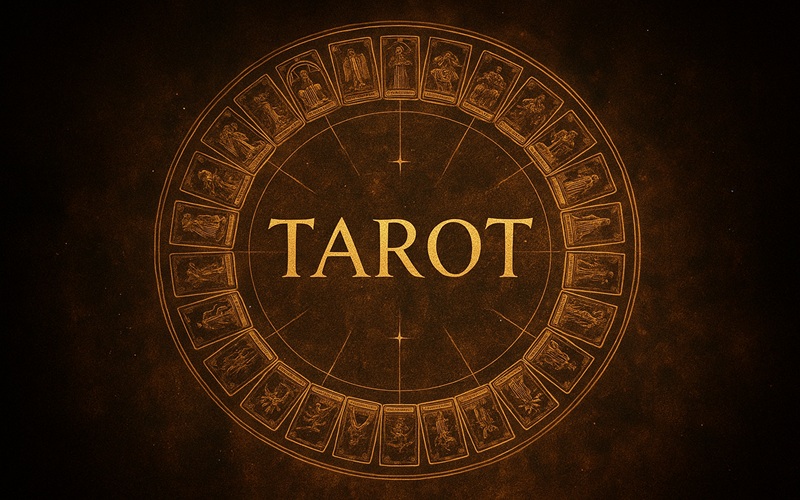
The Tarot is a symbolic system of cards that serves as a mirror of the human spirit, revealing the hidden architecture of consciousness through archetype, image, and number. Originating in Renaissance Europe but rooted in far older mysteries, the Tarot consists of seventy-eight cards divided into the Major Arcana — twenty-two keys of universal principles — and the Minor Arcana, which portray the patterns of daily life. Beyond divination, the Tarot functions as a visual language of transformation, guiding the seeker through the cycles of awakening.
Deeper Meaning:
In the esoteric tradition, the Tarot is a sacred book written in pictures — a portable mandala of initiation. Each card represents a station on the soul’s journey: The Fool stepping into the unknown, The Magician mastering creative will, The Lovers confronting choice and polarity, and The World completing the spiral of realization.
For mystics, philosophers, and magi, the Tarot is both key and map — bridging the macrocosm and the microcosm. The twenty-two trumps correspond to the Hebrew letters, the paths on the Kabbalistic Tree of Life, and the stages of alchemical ascent. When contemplated rather than merely read, the Tarot becomes a tool of inner alchemy — aligning intuition with cosmic intelligence.
References in Texts:
Insights into the Tarot’s hidden origins appear in The Book of Thoth by Aleister Crowley, The Tarot of the Bohemians by Papus, and the Golden Dawn teachings, where it is treated as a synthesis of astrology, Kabbalah, and Hermetic philosophy.
Related Concepts:
- Archetypes
- Kabbalah
- Alchemy
- Divination
- Hermeticism
- Symbolic Language